Monday, February 14, 2022

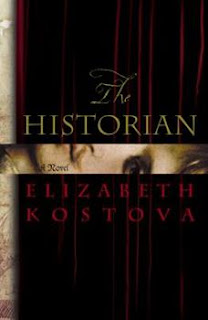
Review of The Historian by Elizabeth Kostova


I just finished reading Elizabeth Kostova's supernatural thriller, The Historian, and I'm like, whoa. Okay, that is possibly the most un-erudite thing you've ever read in a book review, but it's my immediate and visceral reaction. I will try to be more precise forthwith:

The Historian is the tale of our narrator, who when she is sixteen years old finds a curious book and a packet of letters in her father's study. When she questions him about it, he is extremely reluctant to discuss it. However, as she accompanies him on his travels around Europe as a cold-war-era diplomat, she slowly begins to draw a tale from him that seems unbelievable, at first, yet it is supported by the letters, written by his former doctoral advisor, Professor Bartholomew Rossi. Professor Rossi disappeared under mysterious and terrifying circumstances immediately after passing the letters to his advisee, the narrator's father.

As she gets more pieces of the puzzle over the course of a couple of years, our intrepid narrator begins to do her own research into the supernatural historical mystery that caused her father the loss of his cherished friend, Rossi, and possibly the loss as well of her own mother, who died when the narrator was an infant--also under mysterious circumstances that her father will not discuss. She continues to chase clues until her father also disappears abruptly, leaving her in a race against time to find him and to find out what happened to her mother before all is lost to a predator who seems to be stalking them as readily as they stalk him.

This book succeeds in the unlikely task of making historical research, cold war politics and European history fascinating by interweaving it with a scary, thrilling chase that is paced so well, the reader is lead almost breathlessly through the entire six hundred-plus pages to the amazing denouement and skin-crawling epilogue. We follow three successive generations of historians (Professor Rossi, the narrator's parents, and the narrator herself) as they each contribute piece after piece of the mysterious puzzle, following a trail that leads from Amsterdam and France to Romania and Istanbul and through Soviet-controlled Hungary and Bulgaria. In every new location, we learn more about the history of the area, from medieval times through the '30s, '50s and '70s of the 20th century. Everything from the Ottoman Empire to the library systems of various universities and monasteries is explored in the most fascinating way.

One of the minor mysteries of the book is the question of to whom the title refers. Is the Historian Rossi, a highly celebrated and much-published professor in the History department at Oxford, and the originator of the supernatural investigation? Or is it Paul, the narrator's father, who was a doctoral student in that same department until ending up as a diplomat, after the loss of his wife cut short his own search? Is the Historian the narrator, who joins the search, and is, after all, the main character? Or could it be one of the many professors, archivists and librarians who help our investigators along the way, sometimes to their own fatal outcomes? Near the end of the book, the identity of the Historian is revealed, and I guarantee it will make you shiver to your very bones. I highly recommend Elizabeth Kostova's The Historian , an excellent, scary read that will take you along for the white-knuckle ride!


Here are reviews for some more creepy/mysterious books you might enjoy:

https://bucketofuseful.blogspot.com/2022/02/review-of-unless-novel-by-carol-shields.html

https://bucketofuseful.blogspot.com/2022/02/review-of-duma-key-by-stephen-king.html


Saturday, February 12, 2022

Review of Unless: A Novel by Carol Shields


Unless: A Novel 
(HarperCollins, 2002) is the story of Reta Winters, a 44-year-old writer living in Orangetown, Canada, a suburb of Toronto. Reta has all the trappings of an idyllic life: a respectable career; Tom, her partner of 26 years; their three smart, kind teenaged daughters; and a rambling old farmhouse that Reta loves.

However, Reta is struggling with the unexpected loss of her eldest daughter, Norah, not to death, but to an existence completely separate from her family and from the life she so happily lived before: Norah has suddenly and inexplicably dropped out of school and seemingly from life in general, choosing to sit on a street corner in Toronto with a handmade sign hanging around her neck that says one word: goodness. She subsists on handouts from passersby, and any attempts by Reta or her family and friends to talk to Norah or to persuade her to come home are met with silence. They can only leave things for her, knowing that she will give away most of what is given her to other street people.

We are shown a slice of Reta's life as she copes with this heartbreaking situation, surprisingly with a lot of humor. We are introduced to Reta's family and friends, her fellow female writers, her relationships with them and to the world of writing, from passive-aggressive interviewers to sycophantic-yet-overbearing editors, and there is an ongoing theme of a woman's place in the world of writing, as well as the world in general. Reta writes scathingly funny, yet poignant, letters to assorted individuals as a kind of exercise to try to figure out why her daughter "dropped out" of life. Did she withdraw out of a sense of powerlessness, putting herself in such a position of vulnerability and passivity as a way to "claim" that absence of power? Everyone seems to have a theory, but nobody can get Norah to explain her decisions.

Reta spends her days working on a novel of light-hearted, romantic fluff, which serves to distract her, although she begins to see her characters more deeply than, perhaps, she should, as she views them through the focusing lens of the balance of power in male-female relationships. She is drawn sympathetically to the female lead, while the male character becomes ever more bothersome to her. This coincides rather hilariously with her brand new editor's desire to make an artistic statement out of the book, which is intended to be a sequel to a prior light comedy, and to make the annoying, selfish male character practically the sole focus. Those of us who have had editors say they absolutely adore our manuscript before requesting that we change, oh, everything, can sympathize.

I found this book a very absorbing read. Shields has a great way with language, especially dialogue, and she knows when to lighten things up in a realistic way when the subject matter threatens to get ponderous. Reta's letters are interspersed throughout as a kind of food-for-thought snack break, and they are highly entertaining. Shields offers Norah's situation as a storyline to fascinate us with its abnormality, yet folds it into the larger text of relationships and anxiety about one's place in society, to which we can all relate. I would recommend this novel, and I am looking forward to reading other work by Shields, as well.


Here are some reviews for other books you might like: 

https://bucketofuseful.blogspot.com/2022/02/review-of-prodigal-summer-by-barbara.html

https://bucketofuseful.blogspot.com/2022/02/review-of-james-pattersons-quickie.html

Sunday, February 6, 2022

Review of Prodigal Summer by Barbara Kingsolver


Prodigal Summer is the second book I have read by much-lauded author Barbara Kingsolver. The first was The Poisonwood Bible, a novel about the tribulations of an American missionary family in the Belgian Congo, which was a runaway best-seller, and which I would highly recommend. I would also recommend Prodigal Summer (2000, Harper Collins) for many of the same reasons, the main one being authenticity. Kingsolver must have had to do copious research to write The Poisonwood Bible, which not only captures the mood of a remote African village, its daily operations and its attitude towards the white family (as well as the family's attitudes, which varied wildly from member to member), but also the historical data surrounding Patrice Lumumba's failed bid to throw off the yoke of colonial oppression. Even though the storyline predates me and I am no Central African scholar, everything rings true.

In Prodigal Summer , the authenticity is closer to home: The story is set in the Appalachian mountain region of Virginia, where Barbara Kingsolver and her husband have a farm in real life. Although only one of her characters is an actual biologist (the author has a graduate degree in biology and co-writes natural history articles with her husband, Steven Hopp), all of the main characters have some connection to the land and its creatures: Deanna, the forest ranger who enjoys her solitary life maintaining trails and recording wildlife activity on Zebulon Mountain until some unexpected visitors (one of whom is human) throw her into a torrent of doubt and longing; Garnett, an elderly widower obsessed with propagating a blight-resistant chestnut tree and also a tad obsessed with his next-door-neighbor, a sweet but straight-talking apple grower who has vastly differing ideas from Garnett's on many things, from evolution to pesticide use; and Lusa, a city-girl biologist who finds herself plunked down on her new husband's farm, communing with the moths that are much easier to deal with than her gossiping, scornful in-laws.

At first, each one of these stories is told in apparent isolation, despite their common geography. And yet, like a spreading honeysuckle vine, tendrils of each plotline begin to creep together, eventually encircling and intertwining the narratives of the characters and their relationships to one another. I find this tying-together process delightful: each instance of reference to one story from within another is like a cool inside joke that the reader becomes privy to: "Oho, so 
that's who she was talking about!" It's like a reward for paying attention, which is no problem with this well-paced book.

Another thing that Barbara Kingsolver can do profoundly well is get inside her characters' heads. In The Poisonwood Bible, each chapter was related by alternating characters--the four daughters and the wife of the missionary preacher--and it was quite clear that each character had her own very specific personality and point of view. In Prodigal Summer, the three tales are told not in first person but nonetheless squarely from the point of view of each main character, whose storylines even have their own titles (a device that makes it easy to sort out which story you are reading, but also sets a theme for each one): Deanna's is called "Predators", Garnett's is "Old Chestnuts", and Lusa's is "Moth Love". As you read, these titles take on different shades of meaning: Are old folks Garnett and his neighbor the "Old Chestnuts", or does that refer to the once-mighty tree, now felled by blight, that used to be Garnett's family's fortune? Or is it a reference to things you've heard over and over, that may or may not be true? This adds even more depth to your experience of the novel.

One point to make: even though Kingsolver writes convincingly from the point of view of an older man in Garnett's story, this novel may be perceived as a "chick book" because it is primarily about relationships. However, it's not just about male/female and family relationships, but also about our relationship with the land-its natural checks and balances, predators and prey, and how humans can interact well or poorly with it-and with nature in general, including human nature. There is much to be learned in this book, from why you should add a dash of vinegar when canning cherries to why moths fly in spirals, and how to care for one another in the face of grief and loss.

Valuable life lessons, all.


Here are some reviews for other books you might like: 

https://bucketofuseful.blogspot.com/2022/02/review-of-unless-novel-by-carol-shields.html

https://bucketofuseful.blogspot.com/2022/02/review-of-james-pattersons-quickie.html


Friday, February 4, 2022

Review of James Patterson's The Quickie


In James Patterson's book The Quickie , written with Michael Ledwidge, we meet Lauren Stilwell, whose marriage is quietly disintegrating. Her husband works long hours, travels, and seems permanently welded to his cell phone. Her demanding job only widens the gulf developing between them.

After Lauren spots her husband entering a hotel on his lunch hour with an attractive woman, which he later lies about, she becomes miserable enough to have a one-night fling with a charming coworker, with disastrous results.

The murder of a police officer sets off a desperate race between those investigating the crime and those scrambling to cover it up, and Lauren is caught in a frantic web of lies and intrigue. Shock piles upon shock as she discovers neither of the men in her life was what he appeared to be.

This book is an excellent thrill ride from start to finish. An amazing assortment of twists and turns will keep you breathlessly turning pages into the wee hours. Patterson, who is well-known for his series of books featuring Alex Cross, a tough D.C. homicide detective, handles his female protagonist's point of view very realistically, and the collaboration with Ledwidge is quite seamless; there's never a jumbled-together feeling, as with some partner-written stories.

I was happy to find that there two other collaborative books by Patterson and Ledwidge, Step on a Crack and The Dangerous Days of Daniel X, which I am happily looking forward to reading.


Thanks for reading! Here are some more book reviews to check out: 

https://bucketofuseful.blogspot.com/2022/01/review-of-dexter-in-dark-by-jeff-lindsay.html

https://bucketofuseful.blogspot.com/2022/02/review-of-prodigal-summer-by-barbara.html

Saturday, January 29, 2022

Review of Dexter in the Dark by Jeff Lindsay


If you liked the Showtime Original Series Dexter or Dexter: New Blood, here's the original 

Dexter in the Dark (2007, Doubleday) is the third book in the series by Jeff Lindsay on which the Showtime television series "Dexter" is based. If you are unfamiliar with the show or the books, the main thing you need to know is that Dexter is an interesting dude: He is a serial killer who works for, of all places, the Miami Police Department as a blood-spatter analyst.

The ironic thing is that Dexter actually doesn't like blood, despite his vocation and penchant for slicing and dicing people. His love-hate relationship with hemoglobin is carried into the choice of "trophy" he takes a serial killer: one single drop of blood from each victim, neatly preserved on individual glass slides in a wooden box carefully hidden away in his home.

So, if Dexter is such a heinous individual, how can he carry a series? Can we really relate to him as a protagonist? Well, the good news about Dexter is that his foster father, Harry, who recognized Dexter's murderous proclivities when he was still a lad, instilled in him a strict moral code, which is that he must kill only bad guys: other serial killers, child molesters and abusers, etc. Harry, who was a cop, trained Dexter to use his investigative skills to confirm that his prey was unequivocally guilty before the fiendish festivities could commence (as well as how to clean up evidence of said festivities afterward).

Since Dexter follows this code, our inner vigilantes cut him a break, and we sort of overlook his "indiscretions", as we do with a classic antihero type. However, as these stories are narrated in the first person, we are also aware that he does indeed consider himself a bad person, even as he derives pleasure from taking lives. We can also sympathize with his distress over how to deal with typical situations, such as family and workplace conflicts, as well as not-so-typical ones, like how to relate to his girlfriend, Rita, when he is actually incapable of experiencing affection or even sexual attraction.

That's the backstory. In Dexter in the Dark , we learn that Dexter has decided to take the next logical step in his effort to blend in with the normal world, and now Rita is excitedly planning their upcoming wedding. The socially clueless serial killer having to make decisions about bands for the reception and attending tastings with a high-strung "artistic" caterer provide lots of comic relief, as do Dexter's attempts to conduct Harry-style training with Rita's adorable children, Astor and Cody, who have revealed their less-than-adorable true natures to Dexter, who is bemused at the prospect of becoming an actual dad!

And he has to do all this while helping his homicide-detective sister, Deb, who has been assigned a series of incredibly bizarre, cult-like murders. Unbeknownst to Dexter, he himself has set into motion, through his choice of victim, a sequence of slayings leading back to a source of evil so powerful that it sends his Dark Passenger (Dexter's evil 'spirit guide' that urges him to kill) scurrying for cover. How will Dexter, vulnerable and feeling adrift without his Dark Passenger, escape being destroyed by this powerful adversary?

As a fan of the Showtime series, I picked up this book with great anticipation. I have not read the other books in the series ( Darkly Dreaming Dexter, Dearly Devoted Dexter ), so I was unprepared for Lindsay's writing style-specifically the way Dexter refers to himself interchangeably in the third person as well as the first person. Perhaps this is due to the occupying presence of the Dark Passenger, who wasn't addressed in the original TV series (it is in the 2021 series, Dexter: New Blood).

Dexter also seems to be very much in love with his own name, frequently appending alliterative adjectives (Daring Dexter, Disappearing Dexter, etc). This fits the characteristic of narcissism typical to serial killers, but it's a little much. I think it is Lindsay's attempt to add more humor, but I like the humor that more naturally arises from Dexter's social fumbling-it's less contrived. However, you do eventually get used to these devices, and under them is a gripping, interesting and well-paced thriller that does indeed have its darkly comic moments, one of which occurs during its very satisfying conclusion.

If you haven't seen the Showtime series or read the earlier books, you may want to start with Darkly Dreaming Dexter to get the maximum enjoyment. And watch the series, too-the first series is available on DVD or streaming, and the reboot is currently available on Showtime. You'll never believe how likable a homicidal maniac can be!

Liked this review? Here are some more:

https://bucketofuseful.blogspot.com/2020/04/review-of-honeymooners-cautionary-tale.html

https://bucketofuseful.blogspot.com/2016/04/review-of-almost-green-how-i-saved-16th.html

Thursday, December 30, 2021

The Books List, Part Eight


20 Books I Would Recommend Reading, 5 Books I Wouldn't, and 50 from my Reading List


The COVID 19 pandemic rages on, as we go into the third weary year. Time to curl up inside and ring in the new year right with another Books List!

My likes/loves: These are books that entertained me, moved me, taught me things, made me think, inspired me, and that I would heartily recommend. They are not ranked – they are merely in the order in which I read them.

  1. Harry Potter and the Deathly Hallows – J.K. Rowling

  2. The Onion Girl – Charles de Lint

  3. Spiritwalk – Charles de Lint

  4. The Wild Wood – Charles de Lint

  5. Please Don't Come Back from the Moon – Dean Bakopoulos

  6. At Risk – Stella Rimington

  7. Waifs and Strays – Charles de Lint

  8. Train Go Sorry: Inside a Deaf World – Leah Hager-Cohen

  9. Corpse: Nature, Forensics, and the Struggle to Pinpoint Time of Death – Jessica Sachs

  10. YOU on a Diet – Dr. Mark Roizen and Dr. Mehmet Oz

  11. The Rice Diet Report – Jusy Moscovitz

  12. The Key to Midnight – Dean Koontz

  13. The Husband – Dean Koontz

  14. The Good Guy – Dean Koontz

  15. At Fault – Kate Chopin

  16. Still Summer – Jacquelyn Mitchard

  17. The Quickie – James Patterson and Michael Ledwidge - Click here to read my review:  https://bucketofuseful.blogspot.com/2022/02/review-of-james-pattersons-quickie.html

  18. Bayou Folk – Kate Chopin

  19. The Working Poor: Invisible in America – David K. Shipler

  20. Kim – Rudyard Kipling


My meh/yuck list: Did not find these appealing for any number of reasons – some were boring; some had an interesting subject but did not do it justice; some were flat-out terrible. All simply left me cold in some way. Although I am likely to read multiple books by authors I like (you will see a lot of Dean Koontz, Jonathan Kellerman, Margaret Atwood, Charles de Lint and Toni Morrison), I do not excuse those authors when they write a book I didn't like, so they might just show up here, as well.

  1. Lifeguard – James Patterson and Andrew Gross

  2. The Vision – Dean Koontz

  3. Rage – Jonathan Kellerman

  4. On the Road – Jack Kerouac

  5. The Turn of the Screw – Henry James


My Reading List: these are books I haven't read yet, so I don't have a reaction for you. However, I could semi-recommend them, based on the reasons they made it onto my list:

  1. They were on one of those “100 Greatest Books” lists;

  2. They are other books written by authors I really enjoy; or

  3. I read a review, and it sounded like something I'd like.

#1 can be a bit hit-or-miss; #2 is almost (but not always) foolproof for me (but maybe not for you), and #3 usually works out pretty well, as it's a combination of the first two. As always, your results may vary, but consider them suggestions. These may tend to come in chunks of stuff by author (apologies).

  1. The Day of the Locust – Nathanael West

  2. Possession – A.S. Byatt

  3. The Prime of Miss Jean Brodie – Muriel Spark

  4. Kitchen Confidential – Anthony Bourdain

  5. Why People Believe Weird Things – Michael Shermer

  6. Predator – Patricia Cornwell

  7. Blow Fly – Patricia Cornwell

  8. Black Notice - Patricia Cornwell

  9. Point of Origin- Patricia Cornwell

  10. Unnatural Exposure - Patricia Cornwell

  11. Cause of Death - Patricia Cornwell

  12. From Potter's Field - Patricia Cornwell

  13. The Body Farm - Patricia Cornwell

  14. Body of Evidence - Patricia Cornwell

  15. Night – Elie Wiesel

  16. Where Are You Now? - Mary Higgins Clark

  17. Scarpetta – Patricia Cornwell

  18. Your Heart Belongs to Me – Dean Koontz

  19. A Bend in the River – V.S. Naipaul

  20. A Boy's Own Story – Edmund White

  21. A Christmas Carol – Charles Dickens

  22. A Connecticut Yankee in King Arthur's Court – Mark Twain

  23. A Day Off – Storm Jameson

  24. A Disaffection – James Kelman

  25. A Fine Balance – Rohinton Mistry

  26. A Ghost at Noon – Alberto Moravia

  27. A Handful of Dust – Evelyn Waugh

  28. A Heart So White – Javier Marias

  29. A High Wind in Jamaica – Richard Hughes

  30. A Home at the End of the World – Michael Cunningham

  31. A Kestrel for a Knave – Barry Hines

  32. A Maggot – John Fowles

  33. A Man Asleep – Georges Perec

  34. A Pale View of Hills – Kazuo Ishiguro

  35. A Patchwork Planet – Anne Tyler

  36. A Question of Power – Bessie Head

  37. A Room with a View – E.M. Forster

  38. A Scot's Lair (Sunset Song) – Lewis Gibbon

  39. A Sentimental Journey – Laurence Sterne

  40. A Severed Head – Iris Murdoch

  41. A Suitable Boy – Vikram Seth

  42. A Supposedly Fun Thing I'll Never Do Again – D.F. Wallace

  43. A Tale of a Tub – Jonathan Swift

  44. A Tale of Two Cities – Charles Dickens

  45. A Town Like Alice – Nevil Shute

  46. A Void/Avoid – Georges Perec

  47. A Woman's Life- Guy de Maupassant

  48. A World of Love – Elizabeth Bowen

  49. A Year in Japan – Kate T. Williamson

  50. Aaron's Rod – D.H. Lawrence


That's all for now; hope you find these lists useful as you think about things you might like to read.

In case you missed the prior lists, here and the handy links: 

https://bucketofuseful.blogspot.com/2020/03/the-books-list-part-one.html

https://bucketofuseful.blogspot.com/2020/04/the-books-list-part-two.html

https://bucketofuseful.blogspot.com/2020/05/the-books-list-part-three.html

https://bucketofuseful.blogspot.com/2020/05/the-books-list-part-four.html

https://bucketofuseful.blogspot.com/2020/09/the-books-list-part-five.html

https://bucketofuseful.blogspot.com/2020/11/the-books-list-part-six.html

https://bucketofuseful.blogspot.com/2021/05/the-books-list-part-seven.html


Image credit: https://pixabay.com/photos/coffee-food-drink-hottest-leaves-3025022/


Saturday, May 8, 2021

The Books List, Part Seven


20 Books I Would Recommend Reading, 5 Books I Wouldn't, and 50 from my Reading List

Ah, spring! Nice enough to get outside for reading on the porch, a hammock, or what-have-you. Time for another Books List post!

My likes/loves: These are books that entertained me, moved me, taught me things, made me think, inspired me, and that I would heartily recommend. They are not ranked – they are merely in the order in which I read them.

  1. Stolen Lives: 20 Years in a Desert Jail – Malika Oufkir

  2. Affluenza – John de Graaf, David Wann, Thomas Naylor

  3. YOU: The Owner's Manual – Dr. Mark Roizen and Dr. Mehmet Oz

  4. Shotgun Alley – Andrew Klavan

  5. Damnation Street – Andrew Klavan

  6. The Da Vinci Code – Dan Brown

  7. The Consumers' Guide to Effective Environmental Choices- Michael Brower and Warren Leon

  8. The Clan of the Cave Bear – Jean Auel

  9. The Kite Runner – Khaled Hosseini

  10. Widdershins – Charles de Lint

  11. Anansi Boys – Neil Gaiman

  12. Phobias and How to Overcome Them – Gardner and Bell

  13. The Dress Lodger – Sheri Holman

  14. Howard's End – E.M. Forster

  15. London Bridges – James Patterson

  16. Beach Road – James Patterson and Peter de Jonge

  17. Judge and Jury – James Patterson

  18. Someplace to Be Flying – Charles de Lint

  19. Right, Wrong, and Risky – Mark Davidson

  20. Forests of the Heart – Charles de Lint


My meh/yuck list: Did not find these appealing for any number of reasons – some were boring; some had an interesting subject but did not do it justice; some were flat-out terrible. All simply left me cold in some way. Although I am likely to read multiple books by authors I like (you will see a lot of Dean Koontz, Jonathan Kellerman, Margaret Atwood, Charles de Lint and Toni Morrison), I do not excuse those authors when they write a book I didn't like, so they might just show up here, as well.

  1. Everything Bad is Good for You – Steven Johnson

  2. Cell – Stephen King

  3. Lisey's Story – Stephen King

  4. Silent Partner – Stephen Frey

  5. The Deep End of the Ocean – Jacquelyn Mitchard


My Reading List: these are books I haven't read yet, so I don't have a reaction for you. However, I could semi-recommend them, based on the reasons they made it onto my list:

  1. They were on one of those “100 Greatest Books” lists;

  2. They are other books written by authors I really enjoy; or

  3. I read a review, and it sounded like something I'd like.

#1 can be a bit hit-or-miss; #2 is almost (but not always) foolproof for me (but maybe not for you), and #3 usually works out pretty well, as it's a combination of the first two. As always, your results may vary, but consider them suggestions. These may tend to come in chunks of stuff by author (apologies).

  1. Evil – Lance Morrow

  2. Moon Pies and Movie Stars – Amy Wallen

  3. The Untouchable – John Banville

  4. Killing Time – Linda Howard

  5. Hypocrite in a Pouffy White Dress – Susan Jane Gilman

  6. Sick Puppy – Carl Hiaasen

  7. The Painted Veil – W. Somerset Maugham

  8. Wicked: The Life and Times of The Wicked Witch of the West - Gregory Maquire

  9. Never Have Your Dog Stuffed – Alan Alda

  10. The Devil of Nanking – Mo Hayder

  11. Gods in Alabama – Joshilyn Jackson

  12. Early Bird – Rodney Rothman

  13. A Long Way Down – Nick Hornby

  14. Soapsuds – Finola Hughes and Digby Diehl

  15. You Shall Know Our Velocity – Dave Eggers

  16. The Adventures of Augie March – Saul Bellow

  17. American Pastoral – Philip Roth

  18. Apointment in Samarra – John O'Hara

  19. Loving – Henry Green

  20. Lucky Jim – Kingsley Amis

  21. Money – Martin Amis

  22. The Assistant – Bernard Malamud

  23. At Swim-Two-Birds – Flann O'Brien

  24. The Berlin Stories – Christopher Isherwood

  25. The Big Sleep – Raymond Chandler

  26. The Blind Assassin – Margaret Atwood

  27. Blood Meridian – Cormac McCarthy

  28. The Bridge of San Luis Rey – Thornton Wilder

  29. The Movie Goer – Walker Percy

  30. Never Let Me Go – Kazuo Ishiguro

  31. The Painted Bird – Jerzy Kosinski

  32. A House for Mr. Biswas – V.S. Naipaul

  33. I, Claudius – Robert Graves

  34. Infinite Jest – David Foster Wallace

  35. Ubik – Philip K. Dick

  36. Undre the Net – Iris Murdoch

  37. Under the Volcano – Malcolm Lowry

  38. Watchmen – Alan Moore and Dave Gibbons

  39. White Noise – Dan DeLillo

  40. White Teeth – Zadie Smith

  41. Wide Sargasso Sea – Jean Rhys

  42. Call It Sleep – Henry Roth

  43. Pale Fire – Vladimir Nabokov

  44. Play It as It Lays – Joan Didion

  45. A Passage to India – E.M. Forster

  46. Portnoy's Complaint – Philip Roth

  47. The Confessions of Nat Turner – William Styron

  48. The Corrections – Jonathan Frantzen

  49. The Crying of Lot 49 – Thomas Pynchon

  50. A Dance to the Music of Time – Anthony Powell


That's all for now; hope you find these lists useful as you think about things you might like to read.

In case you missed the prior lists, here and the handy links: 

https://bucketofuseful.blogspot.com/2020/03/the-books-list-part-one.html

https://bucketofuseful.blogspot.com/2020/04/the-books-list-part-two.html

https://bucketofuseful.blogspot.com/2020/05/the-books-list-part-three.html

https://bucketofuseful.blogspot.com/2020/05/the-books-list-part-four.html

https://bucketofuseful.blogspot.com/2020/09/the-books-list-part-five.html

https://bucketofuseful.blogspot.com/2020/11/the-books-list-part-six.html


Image from Freepik https://www.freepik.com/free-photo/stack-red-green-books-with-dry-flowers-pink-warm-knitted-sweater_13820266.htm#page=1&query=books&position=5