Showing posts with label book review. Show all posts

Saturday, July 11, 2026

Why I Gave Up on The Magic Mountain by Thomas Mann


My Summer Book Report of Rank, Stinking Defeat

The Magic Mountain, written by German author Thomas Mann in 1924, is one of those books that always lands on the “greatest books” lists, so as I have been trying to broaden my grounding in the classics, I checked it out of the library and had a go. It’s a hefty tome at 706 pages (at least in this translation), but that didn’t scare me; I read pretty quickly—about a page a minute—so that only meant fewer than twelve hours of actual reading. Feeling cocky, I didn’t even get to it for the first two weeks of the three-week checkout period because I was finishing up other things.

Sometimes I read the author forewords (yes, I’m that person), and Mann’s foreword was very witty and engaging. I looked forward to diving right in, so I did. Unfortunately, I dove back out repeatedly. It was all too easy to keep putting this book down, and I can sum up the reason in one word: digression. Before I explain that, let me just set up the story a little: Mann’s novel concerns the experience of a young German man named Hans Castorp, who takes a three-week holiday to visit his cousin Joachim, who is staying as a patient in a sanitorium in Switzerland. (Heh—okay, my Spell Check doesn’t like ‘sanitorium’ and wants me to write ‘sanitarium’. Tough nuts, Spell Check. That’s what they were called.) Aaaaaanyway, almost immediately upon arrival, Hans himself begins to suffer mysteriously from an assortment of physical infirmities, even as he holds himself apart as simply a vacationer among the real patients, whom he observes with a critical, bemused eye.

Mann is, as I mentioned, a witty writer, and he is an excellent hand at character development. The protagonist, from whose perspective we experience the story, is fully-fleshed (the third-person narrative allows us to share Hans’s viewpoint while allowing the author to freely make asides about his character to us) and the supporting characters are colorful and intriguing. But then there’s the digression: frequently, the action of the story is interrupted as we take a trip into Hans’s mind, either witnessing as he internally toys with some idea or theory of his, or as he experiences a memory from his childhood. These are not off-putting at all, as they serve to add dimension to his character and explanation for his actions and motivations, but they are an easy point at which to exit the novel for a while (after all, we do all have lives, I think).

So, it can be slow going. And I started running out of time and renewing the book repeatedly. After all, I had to read it; it was on my list! Alas, I finally had to give up completely, and what did me in was, in one different word: bloviation. Now there’s a word you don’t hear often (my Spell Check just threw up its little electronic hands and stalked out of the room), so I will provide a definition as I understand it: when some long-winded cuss yammers on just to hear himself talk, or a person with a pedantic streak lectures at great length about some lofty concept using pretentious and obscure terminology, that’s bloviation. Mann has a character, Settembrini, who is continually guilty of the former, and I cringed inwardly whenever he made an appearance on the page—I was only about a hundred pages in when, in the middle of another one of Settembrini’s rants, I wondered why the author found it necessary to subject me to this person and whether I could handle much more.

But the final straw came about 20 pages later, in the form of the other type of bloviation, when I was treated to the actual text of the florid and baffling lecture given by the sanitorium’s psychiatrist, Dr. Krokowski. This was the point at which I experienced not mild irritation, but true despair. The author himself was the perpetrator of all this! Was I to expect the next five hundred pages to be miraculously free of any further fits of lengthy punditry? I was not. So I admitted defeat, which was especially bitter because after I snapped the book closed in disgust, I noticed the words “Winner of the Nobel Prize for Literature” winking mockingly up at me from the cover. But frankly, I ain’t gettin’ any younger, and there are plenty of other books out there.

But what of Hans Castorp? Is he being made sick on purpose? Much mention was made of people who didn’t expect to stay long ending up there for years and even dying. Also, the money-hungry nature of the industry was vilified at length (by—you-guessed it—Settembrini). Was that foreshadowing as to Hans’s fate? Why is the book called The Magic Mountain? Do things get exceptionally weird and trippy? Despite all the circumlocution, the story itself had enormously creepy potential. So, I did something I have never, ever done before, as I consider it cheating and spoiling: I turned to the end to see what happened.

And of course I will not spoil the book for you, gentle reader, because you may have a higher tolerance for bloviation. I should think you do, if you have reached the end of this article. Cheers!


Other books I disliked, but at least read:

https://bucketofuseful.blogspot.com/2022/04/review-of-man-who-mistook-his-wife-for.html

https://bucketofuseful.blogspot.com/2022/05/a-review-of-boston-darkens-by-michael.html


Other books I read and liked: 

https://bucketofuseful.blogspot.com/2025/12/book-review-ja-konraths-murder-mystery.html

https://bucketofuseful.blogspot.com/2023/08/review-of-king-in-tree-by-steven.html

https://bucketofuseful.blogspot.com/2022/05/review-of-your-head-is-houseboat-by.html

Thursday, February 19, 2026

The Books List, Part 12

 20 Books I Would Recommend Reading, 5 Books I Wouldn't, and 50 from my Reading List


The days are starting to get longer, and there's nothing like sitting in a sunny window to read. Time for another Books List post!

My likes/loves: These are books that entertained me, moved me, taught me things, made me think, inspired me, and that I would heartily recommend. They are not ranked – they are merely in the order in which I read them.

  1. Brother Odd – Dean Koontz

  2. The Yo-Yo Diet Syndrome – Doreen Virtue

  3. Speed – Mark Harris

  4. MAD about the Sixties – MAD Magazine

  5. Eclipse – Stephenie Meyer

  6. FU, Penguin – Matthew Gasteier

  7. Breaking Dawn – Stephenie Meyer

  8. Wonder Woman: Love and Murder – Jodi Picoult

  9. Wonder Woman: Who Is Wonder Woman? - Allan Heinberg/Terry and Rachel Dodson

  10. Justice Society, vol. 2 - asstd

  11. Woman Rebel: The Margaret Sanger Story – Peter Bagge

  12. Hope and Other Dangerous Pursuits – Laila Lalami

  13. Eva Luna – Isabel Allende

  14. Waking Up White and Finding Myself in the Story of Race – Debby Irving

  15. Hunger – Roxane Gay

  16. DC Comics Backstories: Wonder Woman, Amazon Warrior – Steve Korté

  17. Locke and Key, vol. 6: Alpha & Omega – Joe Hill/Gabriel Rodriguez

  18. The Pushcart Prize, IX: Best of the Small Presses – ed. By Bill Henderson

  19. The Innocent Man – John Grisham

  20. The Numbers Game – Michael Blastland and Andrew Dilnot


My meh/yuck list: Did not find these appealing for any number of reasons – some were boring; some had an interesting subject but did not do it justice; some were flat-out terrible. All simply left me cold in some way. Although I am likely to read multiple books by authors I like (you will see a lot of Dean Koontz, Jonathan Kellerman, Margaret Atwood, Charles deLint and Toni Morrison), I do not excuse those authors when they write a book I didn't like, so they might just show up here, as well.

  1. Boston Darkens – Michael Kravitz – I reviewed it https://bucketofuseful.blogspot.com/2022/05/a-review-of-boston-darkens-by-michael.html

  2. The Nose – Nikolai Gogol

  3. They Who Do Not Grieve – Sia Figiel

  4. Tales from a Traveling Couch – Robert Akeret

  5. The Dord, the Diglot, and an Avocado or Two: The Hidden Lives and Strange Origins of Common and Not-So-Common Words – Anu Garg


My Reading List: these are books I haven't read yet, so I don't have a reaction for you. However, I could semi-recommend them, based on the reasons they made it onto my list:

  1. They were on one of those “100 Greatest Books” lists;

  2. They are other books written by authors I really enjoy; or

  3. I read a review, and it sounded like something I'd like.

#1 can be a bit hit-or-miss; #2 is almost (but not always) foolproof for me (but maybe not for you), and #3 usually works out pretty well, as it's a combination of the first two. As always, your results may vary, but consider them suggestions. These may tend to come in chunks of stuff by author (apologies).

  1. Do Androids Dream of Electric Sheep? - Phillip K. Dick

  2. Doctor Faustus – Thomas Mann

  3. Doctor Zhivago – Boris Pasternak

  4. Dog Soldiers – Robert Stone

  5. Don't Move – Margaret Mazzantini

  6. Downriver – Iain Sinclair

  7. Dracula – Bram Stoker

  8. Drop City – T. Coraghessan Boyle

  9. Drunkard – Émile Zola

  10. Dusklands – J. M. Coetzee

  11. Effi Briest – Theodor Fontane

  12. Elective Affinities – Johann von Göethe

  13. Elementary Particles – Michel Houellebecq

  14. Elizabeth Costello – J. M. Coetzee

  15. Embers – Sandor Marai

  16. Émile, or On Education – Jean-Jacques Rousseau

  17. Empire of the Sun – J. G. Ballard

  18. Enduring Love – Ian McEwan

  19. England Made Me – Graham Greene

  20. Enigma of Arrival – V. S. Naipal

  21. Erewhon – Samuel Butler

  22. Ethan Frome – Edith Wharton

  23. Eugénie Grandet – Honoré de Balzac

  24. Euphues: The Anatomy of Wit – John Lyly

  25. Eva Trout – Elizabeth Bowen

  26. Evelina – Fanny Burney

  27. Everything is Illuminated – Jonathan Foer

  28. Everything You Need – A. L. Kennedy

  29. Exercises in Style – Raymond Queneau

  30. Extinction – Thomas Bernhard

  31. Eyeless in Gaza – Aldous Huxley

  32. Faces in the Water – Janet Frame

  33. Falconer – John Cheever

  34. Family Matters – Rohinton Mistry

  35. Fanny Hill – John Cleland

  36. Fantômas – Marcel Allain and Pierre Souvestre

  37. Far from the Madding Crowd – Thomas Hardy

  38. Farewell My Lovely – Raymond Chandler

  39. Fat: The Anthropology of an Obsession – Kulick, Meneley

  40. Fateless – Imre Kertesz

  41. Fathers and Sons – Ivan Turgenev

  42. Fear – L. Ron Hubbard

  43. Fear and Trembling – Amelie Nothomb

  44. Fear of Flying – Erica Jong

  45. Felicia's Journey – William Trevor

  46. Ficciones – Jose Luis Borges

  47. Fingersmith – Sarah Waters

  48. Flaubert's Parrot – Julian Barnes

  49. Florence Broadhurst: Her Secret & Extraordinary Lives – Helen O'Neill

  50. Foe – J. M. Coetzee


That's all for now; hope you find these lists useful as you think about things you might like to read. If you want more, more, more, you can find the previous lists at these links:

https://bucketofuseful.blogspot.com/2020/03/the-books-list-part-one.html

https://bucketofuseful.blogspot.com/2020/04/the-books-list-part-two.html

https://bucketofuseful.blogspot.com/2020/05/the-books-list-part-three.html

https://bucketofuseful.blogspot.com/2020/05/the-books-list-part-four.html

https://bucketofuseful.blogspot.com/2020/09/the-books-list-part-five.html

https://bucketofuseful.blogspot.com/2020/11/the-books-list-part-six.html

https://bucketofuseful.blogspot.com/2021/05/the-books-list-part-seven.html

https://bucketofuseful.blogspot.com/2021/12/the-books-list-part-eight.html

https://bucketofuseful.blogspot.com/2022/02/the-books-list-part-nine.html

https://bucketofuseful.blogspot.com/2022/05/the-books-list-part-10.html

https://bucketofuseful.blogspot.com/2026/01/the-books-list-part-11-20-books-i-would.html


Image credit: https://www.pexels.com/photo/a-woman-reading-a-book-on-a-couch-5490056/


Saturday, January 10, 2026

The Books List, Part 11: 20 Books I Would Recommend Reading, 5 Books I Wouldn't, and 50 from my Reading List


Time for another Books List post! Curl up by the fire (or the fan, depending on the season) and enjoy (or avoid) these titles:

My likes/loves: These are books that entertained me, moved me, taught me things, made me think, inspired me, and that I would heartily recommend. They are not ranked – they are merely in the order in which I read them.

  1. Song of Solomon – Toni Morrison

  2. The Engish Patient – Michael Ondaatje

  3. Making Money – Terry Pratchett

  4. The Secrets of Harry Bright – Joseph Wambaugh

  5. Bloody Mary – J.A. Konrath – read my review! https://bucketofuseful.blogspot.com/2025/12/book-review-ja-konraths-murder-mystery.html

  6. Does This Clutter Make My Butt Look Fat? - Peter Walsh

  7. Whiskey Sour – J.A. Konrath

  8. Not Buying It – Judith Levine

  9. It's All Too Much – Peter Walsh

  10. Pigs in Heaven – Barbara Kingsolver

  11. A Son of the Circus – John Irving

  12. Nightmares and Dreamscapes – Stephen King

  13. Half Asleep in Frog Pajamas – Tom Robbins – I wrote about how good the writing is, here https://bucketofuseful.blogspot.com/2023/05/the-best-in-writing-half-asleep-in-frog.html

  14. The Hour I First Believed – Wally Lamb

  15. Obsession – Jonathan Kellerman

  16. Post Mortem – Patricia Cornwell

  17. The Target – Catherine Coulter

  18. True Detectives – Jonathan Kellerman

  19. Hemlock Bay – Catherine Coulter

  20. Forever Odd – Dean Koontz


My meh/yuck list: Did not find these appealing for any number of reasons – some were boring; some had an interesting subject but did not do it justice; some were flat-out terrible. All simply left me cold in some way. Although I am likely to read multiple books by authors I like (you will see a lot of Dean Koontz, Jonathan Kellerman, Margaret Atwood, Charles deLint and Toni Morrison), I do not excuse those authors when they write a book I didn't like, so they might just show up here, as well.

  1. New Moon – Stephenie Meyer

  2. Life After Death – Elizabeth Hanley

  3. The Almost Moon – Alice Sebold

  4. The Great and Secret Show – Clive Barker

  5. American Psycho – Bret Easton Ellis


My Reading List: these are books I haven't read yet, so I don't have a reaction for you. However, I could semi-recommend them, based on the reasons they made it onto my list:

  1. They were on one of those “100 Greatest Books” lists;

  2. They are other books written by authors I really enjoy; or

  3. I read a review, and it sounded like something I'd like.

#1 can be a bit hit-or-miss; #2 is almost (but not always) foolproof for me (but maybe not for you), and #3 usually works out pretty well, as it's a combination of the first two. As always, your results may vary, but consider them suggestions. These may tend to come in chunks of stuff by author (apologies).

  1. Cider with Rosie – Laurie Lee

  2. Cigarettes – Harry Mathews

  3. City of God – E.L. Doctorow

  4. City Primeval – Elmore Leonard

  5. City Sister Silver – Jachym Topol

  6. Cloud Atlas – David Mitchell

  7. Cloudsplitter – Russell Banks

  8. Cocaine Nights – J.G. Ballard

  9. Cold Comfort Farm – Stella Gibbons

  10. Come Back, Dr. Caligari – Donald Barthelme

  11. Coming Up for Air – George Orwell

  12. Complicity – Iain Banks

  13. Concrete – Thomas Bernhard

  14. Concrete Island – J.G. Ballard

  15. Confederacy of Dunces – John Kennedy Toole

  16. Confessions – Jean-Jaques Rousseau

  17. Contact – Carl Sagan

  18. Correction – Thomas Bernhard

  19. Cranford – Elizabeth Gaskell

  20. Crash – J.G. Ballard

  21. Crime and Punishment – Fyodor Dostoevsky

  22. Critique of Pure Reason – Immanuel Kant

  23. Crome Yellow – Aldous Huxley

  24. Cry, the Beloved Country – Alan Paton

  25. Cryptonomicon – Neal Stephenson

  26. Cutter and Bone – Newton Thornburg

  27. DSM-IV Made Easy – James Morrison

  28. Dangerous Liaisons – Pierre de Laclos

  29. Dangling Man – Saul Bellow

  30. Daniel Deronda – George Eliot

  31. Dark as the Grave wherein My Friend Is Laid – Malcolm Lowry

  32. Darkness at Noon – Arthur Koestler

  33. Das Kapital – Karl Marx

  34. David Copperfield – Charles Dickens

  35. Day of the Triffids – John Wyndham

  36. Dead Air – Iain Banks

  37. Dead Babies – Martin Amis

  38. Death in Venice – Thomas Mann

  39. Death Sentence – Maurice Blanchot

  40. Decline and Fall – Evelyn Waugh

  41. Deliverance – James Dickey

  42. Delta of Venus – Anais Nin

  43. Diary of a Nobody – George and Weedon Grossmith

  44. Dictionary of the Khazars – Milorad Pavic

  45. Dining on Stones – Iain Sinclair

  46. Dirk Gently's Holistic Detective Agency – Douglas Adams

  47. Disappearance – David Dabydeen

  48. Disgrace – J.M. Coetzee

  49. Disobedience – Alberto Moravia

  50. Dispatches – Michael Herr


That's all for now; hope you find these lists useful as you think about things you might like to read. If you want more, more, more, you can find the previous lists at these links: 

https://bucketofuseful.blogspot.com/2020/03/the-books-list-part-one.html

https://bucketofuseful.blogspot.com/2020/04/the-books-list-part-two.html

https://bucketofuseful.blogspot.com/2020/05/the-books-list-part-three.html

https://bucketofuseful.blogspot.com/2020/05/the-books-list-part-four.html

https://bucketofuseful.blogspot.com/2020/09/the-books-list-part-five.html

https://bucketofuseful.blogspot.com/2020/11/the-books-list-part-six.html

https://bucketofuseful.blogspot.com/2021/05/the-books-list-part-seven.html

https://bucketofuseful.blogspot.com/2021/12/the-books-list-part-eight.html

https://bucketofuseful.blogspot.com/2022/02/the-books-list-part-nine.html

https://bucketofuseful.blogspot.com/2022/05/the-books-list-part-10.html


Image credit: https://pixabay.com/photos/a-book-book-gift-heart-gift-read-1760998/

Saturday, December 13, 2025

Book Review: J.A. Konrath's Murder Mystery, Bloody Mary


I first became acquainted with young writer J.A. (Joe) Konrath via his brace of articles in Writer's Digest magazine about being a young novelist and the process one goes through to get published for the first time. His writing style was very funny and appealing, and I determined to read his work, the first of which was coming out under the name Whiskey Sour, a play on the name of his lead character, a Chicago Police Department lieutenant and violent crimes investigator Jacqueline "Jack" Daniels. He'd signed a contract to produce a second book, as well, which was unnamed at the time.

That book turned out to be Bloody Mary (Hyperion, 2005), and Bloody Mary turned out to be the first book I ended up reading. And what a read it is-fast-paced, layered, touching, and very funny at times. Since Jack (who is, remember, a female) is a homicide cop, the story is a murder mystery, and a serial-murder mystery, at that. Jack is even in personal danger, which ups the stakes considerably.

At the same time, she is dealing with major issues n her personal life, brought to bear by the reappearance of her ex-husband, Alan Daniels, in the middle of a very good relationship with her boyfriend, Latham Conger. This is at the request of Jack's mom, who has run into trouble in her retirement community in Florida and has to stay with Jack in Chicago. On top of all this, there is even an incredibly antisocial cat, Mr. Friskers, that Jack has no choice but to adopt after his owner is slain by the serial killer.

The case, albeit gruesome, presents some funny challenges, as well. Jack's partner, Herb Benedict, is a good cop but provides much comic relief with his dieting and relationship issues, and her nemesis, PI Harry McGlade (who used to be her partner), manages to make any situation he touches miserable for Jack, and yet he helps, in his annoying way. One of the most interesting facets of this book is that not only is it not that difficult to figure out who the killer is, they catch the killer only about halfway through the book, and yet despite all this, it's still a completely riveting read.

Another very appealing thing about the character of Jack Daniels is that she is not the typical TV "sexy cop"-she is attractive, but she is in her 40s, with realistic personal and professional concerns. Konrath has done an impressive job capturing her point of view and resulting internal dialogue, considering the age and gender differences between him and his character.

After this most satisfying and entertaining experience reading Bloody Mary, I am looking forward to checking out Whiskey Sour as well, and more books in this series by J. A. Konrath. All the drinks out there with interesting names have kept the author busy for quite some time!

More book reviews: 

https://bucketofuseful.blogspot.com/2022/02/review-of-james-pattersons-quickie.html

https://bucketofuseful.blogspot.com/2022/01/review-of-dexter-in-dark-by-jeff-lindsay.html

Friday, November 7, 2025

Top Five Books to Read on the Plane


Here are my best suggestions for interesting reading on the plane. Engrossing novels for travel and great nonfiction picks, too!

Going to take an airplane trip soon? If you’re like me, you won’t be able to simply lean back and snooze away the flight, so let’s make sure to have reading material handy. Magazines just won’t do for reading on the plane. Not only do they not usually last the whole flight, with no continuous story to keep a reader engrossed, there are too many opportunities to stop reading and go back to boredom, anxiety, drinking an inadvisable amount, or working up irritation over the silly things people do on airplanes that wouldn’t even get to you if you were lost in a nice, spellbinding read (add those last two together, and you’ve really got a problem). To that end, here are my recommendations for in-flight entertainment of the literary kind:

1. The Horror Story: As long as it doesn’t involve airplanes, a horror story is a great pick, because they are usually quite riveting and your objective is to make the hours pass. Also, since you will be on a well-lit airplane surrounded by people instead of alone in a dark, creaky house on a windy night, you shouldn’t be able to get TOO traumatized. My recommendation in the horror category is Duma Key by Stephen King, which takes place in the Florida keys (no airplanes involved) and is very well-paced to keep you reading, creepy enough to get your horror fix fulfilled, and long enough to last through all but the longest flights. Click to read the whole review.

2. The Mystery: Ah, nothing keeps one immersed in Bookworld like a good mystery. The Name of the Rose by Umberto Eco is my all-time favorite mystery, plunging the reader into the shadowy, intricate world of a medieval monastery. If you’ve already read the Eco, try the scary, thrilling The Historian by Elizabeth Kostova, which covers a broad historical span from the Byzantine Era to modern times, as well as a large swath of the globe. You will learn some things, be creeped out, and follow a tantalizing mystery throughout this satisfyingly long book. Click to read review of The Historian.

3. The Thriller: One of my favorite thriller authors is James Patterson. His novels are breathlessly-paced, can’t-put-‘em-down works of sheer adrenaline. A lot of Patterson’s novels feature Alex Cross, the Washington D.C.-based homicide detective. Each of the Cross books stand alone, but if you don’t want to get into a continuing-character series (references to past events and in-jokes are just less fun, aren’t they?), a good one-book story like The Quickie makes for an engrossing read. Click to read review of The Quickie by James Patterson.

4. The Learning Experience: Fiction may not be your bag, but although non-fiction can be thought-provoking, informational and even entertaining, what you want here is something that will keep you going for the whole flight, not something divided by subject or exercise. A great nonfiction story is the right call, here; you can follow along and learn things the whole time. Autobiography of a Face by Lucy Grealy is a gripping story that gives the reader a vicarious ride along with the author as she experiences life with a disfigurement. If you want a more lighthearted read, any of Bill Bryson’s travelogues (Notes from a Small Island and In a Sunburned Country are good choices, especially if you are headed to England or Australia) or the “green” comedy-of-errors Almost Green: How I saved 1/6th of a Billionth of the Planet by James Glave. Click to read review of Glave book.

5. The Literary Novel: Here, we have to tread carefully; it’s awfully easy to pick something that’s good but that might end up making you cry (The Red Tent by Anita Diamant), which could be a tad embarrassing in front of a planeload of strangers. We also might want to avoid a choice that might make you howl with mirth (anything by David Sedaris, Dave Barry or Dave Eggers—those Daves will make you giggle and jiggle and truly annoy your seatmate). So something that makes you think, touches you without torturing you and leaves you feeling fulfilled is in order. I recommend anything by Barbara Kingsolver, especially The Poisonwood Bible if you have a very long flight. For a shorter flight, try Unless: a Novel by Carol Shields. Click to read full review for Unless. Click to read full review of Prodigal Summer

Now that you have an armload of recommendations, have a great flight! Oh, and you might want to take a magazine anyway; they’re good for shutting up a chatty seatmate. No, don’t whack the person with the magazine; just offer kindly. They will usually take the hint. If they don’t, you can always whack them until they do!


image credit: https://www.pexels.com/photo/a-man-reading-a-book-3884217/

Sunday, August 20, 2023

Review of The King in the Tree by Steven Millhauser


Steven Millhauser is a very accomplished author with a body of work spanning back to 1972, when his debut novel, Edwin Mullhouse, was published. His book Martin Dressler has won a Pulitzer. Both of these titles are on my reading list, but I happened to have purchased The King in the Tree a while back, and my aim is to read the books I already have before getting any new ones. So, this is my jumping-off point into the work of Steven Millhauser. And I like where I landed!

The King in the Tree (2003, Knopf) is a book composed of three novellas, entitled Revenge, An Adventure of Don Juan, and The King in the Tree. Each story has a different setting, different characters, and a different tone. The three are united, however, by similar subject matter: love, longing, and betrayal.

Revenge, the first novella, starts the book off with a bang. The premise of this story is of a woman who is showing a potential buyer around her home, which is for sale. As we progress through the story, the seller reveals bits and pieces of the real story, which is about far more than selling a home. It's written in a kind of first person/second-person hybrid, because there is a narrator, but she is speaking to the unidentified (at first) buyer, which feels like she's talking to you. We're experiencing the story from the point of view of the buyer, although that person never gets a single line of dialogue, because we are passively listening to the narrator unwind the story, room by room. And yet, we are also experiencing the story from the point of view of the narrator, because she is sharing all of her feelings with us. It was absolutely spellbinding, and when I finished, I basically had to sit and go “Whoa”. I love stories that make me do that!

The second novella, An Adventure of Don Juan, is told in a more traditional third-person style, although we are fully inhabiting the point of view of Don Juan Tenorio, the famous seducer. This ended up making me uncomfortable, because he turns out to be a seriously vile person, wrapped up in the pretty packaging of his handsome face, wealth, and courtly ways. In this tale, Don Juan becomes bored with his self-indulgent lifestyle in Venice and travels to England on the invitation of a casual friend, Augustus Hood, a creative prodigy whose lovely wife and striking, enigmatic sister-in-law are given the care of their guest, with increasingly dire consequences. The conclusion of this story was harrowing, but satisfying.

The 'title track' of the collection, The King in the Tree, is the longest of the three, and packs even more twists and turns than the prior stories. It is based on the legend of Tristan and Yseut/Yseult/Isolde/Isolt, in this version spelled Ysolt. Anyone familiar with the legend knows that it is the classic “doomed lovers” tale, but this version, narrated by the king's advisor and bosom friend, Thomas, gives us a far more subtle view, showing us how the love affair between King Mark of Cornwall's nephew, Tristan, and his queen, Ysolt, is dealt with (or at times not dealt with) by the king, who deeply loves them both.

I enjoyed this book so much. The writing is just exquisite. Millhauser knows how to set a scene, hatch a plot, and keep things moving, but what I loved best is his ability to thoroughly inhabit his characters – the wounded, vindictive unnamed character in Revenge, the cocky, jaded, Don Juan, the gentle, faithful Thomas – giving us a full immersion into the story through their eyes. I can't wait to read more Millhauser!


If you enjoyed these, please check out my other book reviews: 

https://bucketofuseful.blogspot.com/2023/05/the-best-in-writing-half-asleep-in-frog.html

https://bucketofuseful.blogspot.com/2022/05/review-of-your-head-is-houseboat-by.html

https://bucketofuseful.blogspot.com/2022/05/a-review-of-boston-darkens-by-michael.html

Monday, May 22, 2023

The Best in Writing: Half Asleep in Frog Pajamas


One of my favorite literary passages appears in the book Half Asleep in Frog Pajamas by Tom Robbins. This book could perhaps be best described as a mystical screwball comedy about the stock market. I know that’s a lot to accommodate as a concept, but Robbins handles it deftly. His dialogue is creative and funny, his deeply flawed characters are maddeningly well-developed and his plot is twisted, yet consistent. But this is not a book report, Dear Reader. This is my review of one jewel-like passage that outshines not only the rest of the book but also the complete works of many other authors.

Okay, that’s a lot of hyperbole, but now you may judge for yourself. The story is set in Seattle, that bastion of dampness (yes, they have a stock market there), and in one rather long but deliciously sensory paragraph, Robbins sums up the endless, permeating rain:

This is Seattle, the brief, bright spring has stalled, and the rains have returned. They have stolen down from the Sasquatch slopes. They have risen with the geese from the marshes. It rains a chattering of totem teeth. It rains a sweat lodge of ancient vapors. The city, with its office towers and electricity, has been somehow primitivized by the rain: every hue darkened, every wheel slowed, every view foreshortened, every modern, commercial mind-set turned in on itself, forced to rub shoulders with the old salamander who sleeps in the soul. Hour after hour, the rain will fall; apartments, decorated to be showplaces, will take on the character of burrows or nests; and espresso carts, the little pumping stations of Seattle’s lifeblood, will glow beneath their umbrellas like the huts of shamans. Drops spiral from every cornice, every antenna, every awning. Drops glisten on each plate-glass window, each tailgate, each inch of neon that sizzles in the mist. Dense, penetrating, and modifying, the rain narrows the gap between nature and civilization. Forgotten longings stir in the crack.

I love the way Robbins captures the relentlessness of the drenching Seattle rain. Indeed, the use of one long paragraph mimics the never-ending effect of an all-day soaking rain. The onomatopoeia of “a chattering of totem teeth” evokes the nonstop ticking of rain on every surface, and the metaphors of the sweat lodge of ancient vapors and the espresso carts like the huts of shamans keeps to the ancient and mystical theme of the rain “primitivizing” the modern city with its timeless embrace. More onomatopoeia: drops glisten, neon sizzles. Robbins ends the passage by restating the triumph of ancient Nature over the edifices of modernity and the awakening of the deeper self, perhaps the “old salamander who sleeps in the soul”. In my personal opinion, this is masterful, and I hope you enjoyed it, too.


Other literary reviews you might enjoy: 

https://bucketofuseful.blogspot.com/2022/02/review-of-duma-key-by-stephen-king.html

https://bucketofuseful.blogspot.com/2022/05/a-review-of-boston-darkens-by-michael.html

https://bucketofuseful.blogspot.com/2022/02/review-of-historian-by-elizabeth-kostova.html

Image Credit: https://www.pexels.com/photo/water-dew-in-clear-glass-panel-125510/

Monday, May 30, 2022

Review of Your Head is a Houseboat by Campbell Walker, aka Struthless


I found Campbell “Cam” Walker, known online as Struthless, on YouTube a couple of years ago. I can't remember whether his channel was recommended by a friend or by YouTube's algorithm, which no doubt noticed that I was enjoying the channels of my fellow artists (whichever/whoever it was, thank you!!). I initially followed him because he had a lot of great art videos, but I noticed that besides having really good advice about producing art, he also just had really good advice, period, about life in general. I look forward to his videos about how to handle life as much as his videos about how to get past creative blocks or how to commercialize your art. I also enjoy the window that he allows us into his own life, and I have followed his successes with his art ventures and his personal growth, as well as his sweet and supportive relationship with his partner, Felicity.

And then, along with all his other projects, came the book, Your Head is a Houseboat. Feeling like I had derived so much value from watching his YouTube channel, I bought the book to offer my support. And just like his channel, the book has all the personality, the quirky flair, and the honest, down-to-earth helpfulness I've come to know and love from the Struthless channel. So now, here is my review, for those of you who would like to know more about the experience of reading Your Head is a Houseboat.

As with his videos, Cam starts out with a bit of a disclaimer in the foreword, which essentially says, “I'm not an expert, so take what I say with a grain of salt, but these are things that have worked for me and might work for you, too.” We then venture into the table of contents, which starts off with a bang, as Chapter One is called YOU'RE GOING TO DIE. I find this hilarious, because I know it's going to be a shot of philosophy and common sense in a let's-just-get-this-established-right-up-front kind of way. The contents are arranged in a very appealing way, with colorful graphic blocks.

This book is a very easy read. The pages are not dense with text, owing both to the delightful illustrations and also to the light, open font (it's not identified that I could see, but it looks like Century Gothic). So it's physically easy to read, but it's also easy to absorb and understand; there is plenty of information, but it's parcelled out in easy chunks in a conversational tone that is very much the way Cam presents in his Struthless channel videos. Things are explained with clarity but not a trace of self-importance; this is less like a lecture and more like advice from a friend who is really excited to share what he has learned with you so that you can enjoy the benefit, as well.

Your Head is a Houseboat is not just funny and entertaining, it is enlightening and helpful, as well. There are useful exercises in each section that you should absolutely do (not just initially, but any time you might need them), but even simply reading the book will provide you with very valuable insight into the inner workings of your very own houseboat and how to tidy it up so you can navigate that ocean out there. Oh, look at me, all caught up in the metaphor – well, it's catchy!


Link to the Struthless YouTube channel: https://www.youtube.com/c/struthless

Reviews of other books you might like:

https://bucketofuseful.blogspot.com/2016/04/review-of-almost-green-how-i-saved-16th.html

https://bucketofuseful.blogspot.com/2022/01/review-of-dexter-in-dark-by-jeff-lindsay.html

https://bucketofuseful.blogspot.com/2022/02/review-of-duma-key-by-stephen-king.html


Saturday, May 21, 2022

A Review of Boston Darkens by Michael Kravitz


Boston Darkens is a semi-post-apocalyptic story of practical survival after the detonation (by whom, it is never said) of an electromagnetic pulse (EMP) nuclear weapon. The protagonist is Ben Randal, a middle-aged man who lives in a comfortable suburban neighborhood. When the EMP strike occurs, everyone is rendered helpless, and he goes full alpha-male and takes it upon himself to organize everyone. Someone has to do it, right?

The EMP has taken anything that contains electronics offline, which includes most cars. Handily enough, he has access to a classic car that his son has been restoring, a 1956 Buick Riviera. This car's systems aren't controlled by electronics, and so it has been unaffected by the pulse. Faced with a dwindling supply of water, Ben decides to make a run to a water source in Connecticut, taking along his teenage daughter and her best friend, a harrowing trip that will only be the first of the book.

This is a quest story, perhaps modeled after a book like The Stand, but that is where the comparison stops. Kravitz's writing is not in itself bad, but his characterizations are extraordinarily off-putting. There is a disturbing passage in which Ben “jokingly” indulges in some grade-A xenophobia, including thinly-veiled Islamophobia. Many female characters aren't even named, just reduced to judgmental nicknames like “the divorcee” and “the angry bitch”. His own wife is portrayed as irrational and difficult, even though the disrespectful way that he treats her isn't acknowledged as such; we just hear his internal whining about her behavior, as though he had naught to do with it. And at one point, he contemplates “giving” his son a woman, as though women were utilitarian objects for use in sexual training.

This rather barbaric outlook isn't terribly surprising and is consistent with his ultra-conservative, he-man character. Unfortunately, we're supposed to like the main character of a story enough to care what happens to them, and I can't tamp down my annoyance with this dude enough. The two girls are pretty cool, but in Kravitz's hands, they aren't fully-realized characters so much as props; the Black best friend, for example, is given a storyline in which she is the child of a single mom who wants her daughter to, and I quote, “get out of the ghetto life”, so it's pretty clear that she exists so that Ben can play White savior. If the friend, Vivian, had simply been a classmate of equal socioeconomic status and hadn't been cast as such a stereotype, it would have been nice to see the representation. As it is, it seems her presence is simply there to beatify the main character.

The idea of an EMP nuke and how people would be challenged to deal with the aftermath of not being able to rely on computers and other electronics is interesting, though, and it could really launch an entire series of books dealing with how society would have to be reformed and reinvented. However, I would prefer that series not feature such judgmental, self-righteous, and misogynistic characters, unless they are the villains, not the heroes, of the story.

I found this concept intriguing enough to do a little research on EMP nukes, because I wondered exactly what is an EMP nuke—is that a thing that is possible? What would actually happen? I found a very informative entry on Wikipedia, here:

https://en.wikipedia.org/wiki/Nuclear_electromagnetic_pulse

Electromagnetic pulses have been associated with nuclear explosions since the beginning. The first nuclear tests shielded the electronics because Enrico Fermi predicted that they could be damaged by the EMP. Indeed, after the war, as testing continued, the power of a nuclear EMP was demonstrated in the Starfish Prime test. From Wikipedia:

In July 1962, the US carried out the Starfish Prime test, exploding a 1.44 Mt (6.0 PJ) bomb 400 kilometres (250 mi; 1,300,000 ft) above the mid-Pacific Ocean. This demonstrated that the effects of a high-altitude nuclear explosion were much larger than had been previously calculated. Starfish Prime made those effects known to the public by causing electrical damage in Hawaii, about 1,445 kilometres (898 mi) away from the detonation point, knocking out about 300 streetlights, setting off numerous burglar alarms and damaging a microwave link.[8]

Weapons designers sought to exploit and enhance the EMP, which had really just been incidental to the explosion itself, originally. But now that missile guidance systems, communications, and warfare in general is so dependent upon electronics, the ability of an EMP to disable an opponent's weapons systems would make for a short war, indeed:

Also known as an "Enhanced-EMP", a super-electromagnetic pulse is a relatively new type of warfare in which a nuclear weapon is equipped with a far greater electromagnetic pulse in comparison to standard nuclear weapons of mass destruction.[40] These weapons capitalize on the E1 pulse component of a detonation involving gamma rays, creating an EMP yield of up to 200,000 volts per meter.[41] For decades, numerous countries have experimented with the creation of such weapons, most notably China and Russia.

According to a statement made in writing by the Chinese military, the country has super-EMPs and has discussed their use in attacking Taiwan. Such an attack would debilitate information systems in the nation, allowing China to move in and attack it directly using soldiers. The Taiwanese military has subsequently confirmed Chinese possession of super-EMPs and their possible destruction to power grids.[42]

In addition to Taiwan, the possible implications of attacking the United States with these weapons was examined by China. While the United States also possess nuclear weapons, the country has not experimented with super-EMPs and is highly vulnerable to any future attacks by nations. This is due to the countries reliance on computers to control much of the government and economy.[41] Abroad, U.S. aircraft carriers stationed within a reasonable range of an exploding bomb are subject to complete destruction of missiles on-board, as well as telecommunication systems that would allow them to communicate with nearby vessels and controllers on land.[42]

Now that we know more about what an EMP is, let's look at whether it is capable of actually doing what it did in the book:

An energetic EMP can temporarily upset or permanently damage electronic equipment by generating high voltage and high current surges; semiconductor components are particularly at risk. The effects of damage can range from imperceptible to the eye, to devices literally blowing apart. Cables, even if short, can act as antennas to transmit pulse energy to equipment.

An EMP would probably not affect most cars, despite modern cars' heavy use of electronics, because cars' electronic circuits and cabling are likely too short to be affected. In addition, cars' metallic frames provide some protection. However, even a small percentage of cars breaking down due to an electronic malfunction would cause temporary traffic jams.[44]

An EMP has a smaller effect the shorter the length of an electrical conductor; though other factors affect the vulnerability of electronics as well, so no cutoff length determines whether some piece of equipment will survive. However, small electronic devices, such as wristwatches and cell phones, would most likely withstand an EMP.[44]

So in actuality, most cars probably wouldn't be affected, and cellphones, as well, are likely to make it. However, since it's still somewhat within the realm of possibility, and since in science fiction, we can certainly expect to have a suspension of disbelief for the sake of a good story, I'd be willing to roll with it.

Now, all we need is a good story.

Sunday, April 24, 2022

Review of The Man Who Mistook His Wife for a Hat, by Oliver Sacks


A Neurologist Laughs at Autistic Children and Impaired Adults—Nice, Huh?

A few years ago, I started doing research on psychiatric disorders for a novel I was writing, and I developed a fascination for the way the human mind works, so it was with great anticipation that I picked up The Man Who Mistook His Wife for a Hat by Oliver Sacks, a former Professor of Clinical Neurology at Albert Einstein University. As the book is a recounting of a variety of rather extreme neurological case histories, I was looking forward to a fascinating look into the varied and interesting ways the brain copes with damage or genetic disorder, as well as some insight into how and why this happens. The book is fascinating, in abundance; but it is enlightening to a far lesser degree, and tiresome to a fault.

First of all, this book is clearly not written with the unprepared reader in mind. Sacks makes constant reference to his own prior works, as well as those of others (Luria, Borges, and Zazetsky, in particular, are cited in just about every chapter), presuming, I guess, that the reader is already thoroughly conversant with those works. The abundance of citations makes me guess this offering may well have started as an academic paper, in which the assumption of familiarity with other published works would certainly be reasonable. But it was then repackaged as a bestseller and offered to the general public, who is asked to wrangle Sacks’s meandering hypotheses, which are frequently filled with jargon and tend to be unnecessarily oblique. To illustrate, here is one sentence from the book:

What we see, if nothing else, is the universality of inhibition, even at the most elemental perceptual level: the need to inhibit what Head regarded as primordial and full of feeling-tone, and called ‘protopathic’, in order to allow the emergence of the sophisticated, categorizing, affectless ‘epicritic’.

While not completely impenetrable, this kind of textbookese can slow the reader down considerably. Even odder than the 50-dollar words are the improvised ones: feeling-tone, anybody?

More disturbing is the book’s tone toward its subjects, which range from ‘normal’ ('neurotypical' is a much more kind--and accurate--word to describe) people who have sustained brain damage from injury, stroke, or an undiagnosed cause, to people who were born with a condition, such as developmental delay ('retardation' here) or autism. In all of these cases, Sacks, possibly in an effort to make these conditions more accessible or less scary (his motives really are unclear), takes the tack that he finds all these cases highly amusing—he chortles over the shortcomings of the mentally challenged and the autistic, here lumped together as “mentally defective”.  He also uses words like “idiot” and “moron”, which, although they are--or were--actual technical terms, are extremely off-putting to the general reader. There are also some decidedly non-technical terms like “clumsy” and “freak”. He praises the achievements of developmentally challenged adults as though they were toddlers, and in general is highly patronizing.

Sacks is also the worst kind of know-it-all: the one that firmly believes what he assumes must be right, just because he’s so gosh-darn smart. There are quite a few examples of this; one can be found in a passage in which he is describing a drawing of a fish made by a young man with autism (in keeping with Sacks’s continual sense of personal amusement with the mentally challenged, the chapter is labeled “The Autist Artist”—hilarious, no?) wherein he remarks:

“It was still a trout…with egregiously human features, an odd nostril (what fish has nostrils?)”

The answer is: all of them. All fish have nostrils. And if you hadn’t assumed the artist was a silly fool just because he is autistic, Dr. Sacks, you might have realized how extremely observant he was, instead of just laughing at his ‘inventions’. Perhaps Sacks fancied himself an ichthyologist as well as a neurologist?

Sacks almost constantly makes assumptions about things he couldn’t possibly know, such as the thoughts and feelings, or lack of same, of these so-called “defectives”, and makes pronouncements upon their natures and even their very paths in life. One wonders how he can speak with such surety of the workings of the minds of his subjects, even after he acknowledges his failure to understand their motivations?

Now, this book isn’t totally useless: it gives good definitions for such disorders as agnosia, aphasia, amnesia, and so on, and the case histories are fascinating. You could always just read the case histories and not bother with Sacks’s analyses, which is where he gets particularly annoying. Also, be aware that the book was first written in 1970 (I read the 1987 edition), and may not have undergone extensive rewriting. Sacks’s patronizing and presumptive attitude may be a reflection of the times; so much more is now known about neurological disorders, particularly autism spectrum disorders, so if you really want to read this book, try to get the most recent edition possible. Oliver Sacks died in 2015, but perhaps prior to that, he became enlightened as to the existence of fish nostrils, as well as to the innate humanity of neurodivergent people. 


cover: Carin Goldberg, Harper and Row 1987


Here are some books I did like: 

https://bucketofuseful.blogspot.com/2022/02/review-of-duma-key-by-stephen-king.html

https://bucketofuseful.blogspot.com/2022/02/review-of-historian-by-elizabeth-kostova.html

https://bucketofuseful.blogspot.com/2022/02/review-of-unless-novel-by-carol-shields.html


Thursday, February 17, 2022

Review of Duma Key by Stephen King


Stephen King is one of the most prolific and successful writers in history. He has penned classics like The Stand and has had some not-so-great moments, as well (more on that later), but Duma Key is a great standalone book. This scary tale of suspense is narrated by its protagonist, Edgar Freemantle, a man who became successful and wealthy in the building trade, but whose career was cut short by a terrible jobsite accident that took one of his arms, severely damaged a leg and his vision, and, perhaps worst of all, rattled his brain enough to cause lapses in his memory and language skills and left him dealing with sudden bursts of rage.


Steeped in an agonizing stew of anger, frustration and despair, suffering constant torment from his physical wounds, and dealing with the impending divorce from his wife of 25 years, Edgar embraces a plan of suicide. Fortunately, this idea is headed off by Kamen, his therapist, who suggests a change of scenery. This results in Edgar's trading the impending winter cold of Minnesota for the tropical sunsets of Duma Key, Florida, where he ends up in a large pink house that hangs out over the water and seems to extend a special welcome to him.

From the very first day in "Big Pink", Edgar starts to make noticeable progress toward recovery. He finds his pain and stiffness diminishing, and he begins to practice walking on the beach without his cane, going farther every day. His also previously-undeveloped artistic talent emerges in a big way, so much so that in a few months, he has a studio full of drawings and paintings that leave people awestruck, as well as a little spooked. He develops close friendships with his young assistant, Jack Cantori, and with the only year-round residents of the Key, a man named Wireman and his employer, the gracious yet mysterious Elizabeth Eastlake, who also know a thing or two about trauma, both physical and mental. Buoyed by these relationships and by supportive emails from his adoring daughter, Ilse, and riding a powerful creative high as his artistic talent "unbottles", Edgar is happier on Duma than he thought he ever could be, but then things start to get creepy...

Don't they always? What's the point of a Stephen King book if they don't, right?

King had had several missteps, in my opinion, in the period of time prior to this work -- the abysmal Lisey's Story and the last two books in the Gunslinger series come immediately to mind -- but Duma Key is a good return to form; it kept me turning pages (and there are 609 of them) with a minimum of exasperated snorts--and even some actual eek! moments.

He still sticks somewhat to his formula: Domestic animals, for example, are not safe around Stephen King; he murders yet another beloved pet in this story. It happens early on and is dispensed with fairly quickly, but it is not really necessary to drive the plot forward, and I'm thinking Mr. King could do us all a favor and keep his animal issues to himself. It was understandable in Pet Sematary, but not since. (Eh-hem. Sorry, soapboxing a bit, there.) The other thing the author does with consistency is kill off main characters of whom you've grown fond, and, as if to add insult to injury, usually tells you about it in advance. Unlike the animal cruelty, however, I can live with this as a trademark of his style that I might miss, even though it has made me swear aloud more than once.

Also true to King's style, though, are fully-developed characters, with individual personalities and interesting histories, who do completely understandable things and make completely plausible observations. It is this firm grounding in reality that allows you to hang on when the creepy winds start a-blowin', and to suspend your disbelief when they get to gale-force. I'm especially impressed by King's ability to pace the reader through a very long book by keeping it interesting the whole time. As with any particularly engaging yarn, the length of the book is a treat, not a burden, because the journey's as much fun as the destination -- maybe more so.

I don't know if "fun" is the right word for the delicious terror of a well-written Stephen King book, but 
Duma Key is "shivery good"!

Another scary page-turner you might like: 
https://bucketofuseful.blogspot.com/2022/02/review-of-historian-by-elizabeth-kostova.html


Monday, February 14, 2022

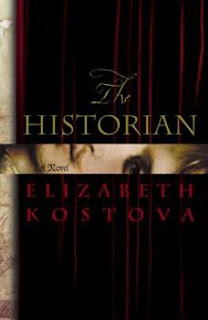
Review of The Historian by Elizabeth Kostova


I just finished reading Elizabeth Kostova's supernatural thriller, The Historian, and I'm like, whoa. Okay, that is possibly the most un-erudite thing you've ever read in a book review, but it's my immediate and visceral reaction. I will try to be more precise forthwith:

The Historian is the tale of our narrator, who when she is sixteen years old finds a curious book and a packet of letters in her father's study. When she questions him about it, he is extremely reluctant to discuss it. However, as she accompanies him on his travels around Europe as a cold-war-era diplomat, she slowly begins to draw a tale from him that seems unbelievable, at first, yet it is supported by the letters, written by his former doctoral advisor, Professor Bartholomew Rossi. Professor Rossi disappeared under mysterious and terrifying circumstances immediately after passing the letters to his advisee, the narrator's father.

As she gets more pieces of the puzzle over the course of a couple of years, our intrepid narrator begins to do her own research into the supernatural historical mystery that caused her father the loss of his cherished friend, Rossi, and possibly the loss as well of her own mother, who died when the narrator was an infant--also under mysterious circumstances that her father will not discuss. She continues to chase clues until her father also disappears abruptly, leaving her in a race against time to find him and to find out what happened to her mother before all is lost to a predator who seems to be stalking them as readily as they stalk him.

This book succeeds in the unlikely task of making historical research, cold war politics and European history fascinating by interweaving it with a scary, thrilling chase that is paced so well, the reader is lead almost breathlessly through the entire six hundred-plus pages to the amazing denouement and skin-crawling epilogue. We follow three successive generations of historians (Professor Rossi, the narrator's parents, and the narrator herself) as they each contribute piece after piece of the mysterious puzzle, following a trail that leads from Amsterdam and France to Romania and Istanbul and through Soviet-controlled Hungary and Bulgaria. In every new location, we learn more about the history of the area, from medieval times through the '30s, '50s and '70s of the 20th century. Everything from the Ottoman Empire to the library systems of various universities and monasteries is explored in the most fascinating way.

One of the minor mysteries of the book is the question of to whom the title refers. Is the Historian Rossi, a highly celebrated and much-published professor in the History department at Oxford, and the originator of the supernatural investigation? Or is it Paul, the narrator's father, who was a doctoral student in that same department until ending up as a diplomat, after the loss of his wife cut short his own search? Is the Historian the narrator, who joins the search, and is, after all, the main character? Or could it be one of the many professors, archivists and librarians who help our investigators along the way, sometimes to their own fatal outcomes? Near the end of the book, the identity of the Historian is revealed, and I guarantee it will make you shiver to your very bones. I highly recommend Elizabeth Kostova's The Historian , an excellent, scary read that will take you along for the white-knuckle ride!


Here are reviews for some more creepy/mysterious books you might enjoy:

https://bucketofuseful.blogspot.com/2022/02/review-of-unless-novel-by-carol-shields.html

https://bucketofuseful.blogspot.com/2022/02/review-of-duma-key-by-stephen-king.html